
Intensive lifestyle changes and weight loss cut the risk of type 2 diabetes for overweight and obese by 58% in three years1. This shows the big impact of an insulin resistance diet on your health. Insulin is vital for turning food into energy. But sometimes, insulin can’t work well, leading to high glucose levels and a higher risk of diabetes. A diet rich in whole, unprocessed foods helps manage your insulin sensitivity1.
Eating healthy, staying active, and keeping a good weight are key to fighting insulin resistance. For example, the American Heart Association advises 150 minutes of exercise each week to improve your insulin sensitivity and health1. Just losing 7-10% of your body weight lowers the chance of prediabetes turning into diabetes1.
Many health plans, like Medicare, cover visits with a Registered Dietitian Nutritionist. They offer personal meal plans and expert advice on how to live healthier. Getting this help makes it easier to manage insulin resistance well1. A Nutritionist can show you the link between exercise, weight, and insulin. This knowledge helps you reach your health goals better.
Quick Recommendations; These are strategies and tips for creating an insulin resistance diet for an improved body health , however if you want faster results we recommend you to try out GlucoBerry.
Interested in insulin resistance diet foods or meal prep? These changes can greatly help your health journey. Managing insulin resistance now leads to a brighter future. Let’s explore the best ways to make a difference today!
Understanding Insulin Resistance
Insulin resistance is a condition where your cells don’t respond well to insulin. This leads to high blood sugar levels. The pancreas has to work harder to make more insulin. Without enough insulin, you could develop prediabetes or type 2 diabetes.
Genetics, lack of exercise, and a diet with too many calories and sugars contribute to insulin resistance2. It’s important to know the signs, like feeling hungrier than usual, tired a lot, and gaining weight. These point to managing the condition effectively. Extra blood sugar is stored as fat around the belly and organs.
The key to fighting insulin resistance is by following the American Heart Association’s advice. They recommend at least 150 minutes of exercise every week to help your body use insulin better32. Also, eating healthy is crucial. The American Diabetes Association suggests eating whole, unprocessed foods and avoiding sugary or high-glycemic index foods3.
Planning your meals can also help with insulin resistance. Make sure half your plate is filled with vegetables and add whole grains, legumes, lean protein, some fruit, and watch your dairy intake3. Eating around 1,500 calories a day with these foods can lead to weight loss and better insulin resistance2.
Key Components of an Insulin Resistance Diet
An effective diet for insulin resistance focuses on whole, unprocessed foods. It limits processed items with added sugars, salts, and trans fats. Non-starchy vegetables such as leafy greens and berries are key. They slow sugar absorption, avoiding quick rises in blood sugar4.
Eating enough fiber is very important, with a goal of 25 grams daily according to the American Diabetes Association5. Whole grains like quinoa and oats don’t spike blood sugar, making them great for an insulin resistance diet4. Including proteins from fish and legumes keeps you full, reducing the desire for sugary snacks4.
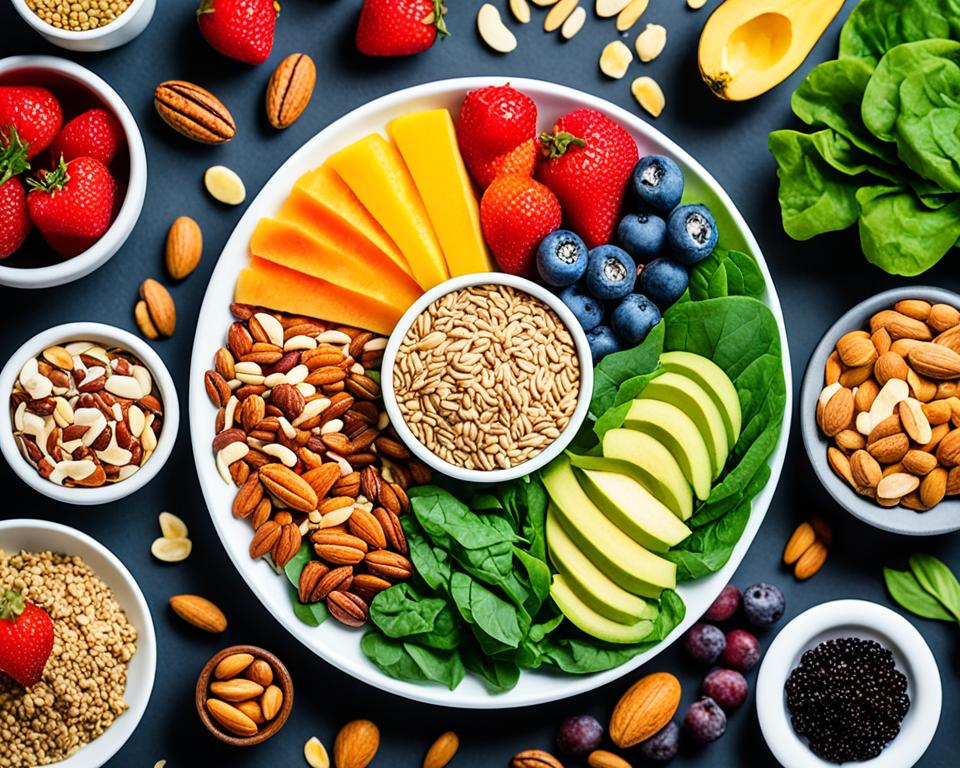
Healthy fats from foods like avocados and olive oil support your body’s insulin use. They also help control your appetite4. Yet, too much sugar, like in drinks and sweets, can lead to insulin problems4. Getting 7 to 9 hours of sleep per night is important for your body’s use of insulin54.
Moving your body is also crucial. Just 30 minutes a day of walking, swimming, or biking can really help. To eat right for insulin resistance, learn about the glycemic index and plan your meals well6. It also means focusing on lots of fiber, choosing lean meats, and watching your portions. Doing these things helps you manage your blood sugar and lose weight. It also boosts your overall health and cuts your risk for serious diseases6.
Insulin Resistance Diet Plan for Weight Loss
An insulin resistance diet plan for weight loss aims to cut 7-10% of your body weight78. This goal lowers the risk of getting type 2 diabetes. The plan focuses on eating veggies, fiber-rich grains, and lean proteins. These foods provide essential nutrients and energy7. For some, losing weight is hard because the body handles sugar differently. But, planning meals carefully can make weight loss possible8.
Exercise is key in this diet plan. It lowers blood sugar and helps cells use insulin better7. Moving each day and eating well can stop diabetes and keep sugar levels in check7. Adding good fats, like those in nuts and seeds, also supports weight loss7. You should also cut down on processed foods and sugar, eat meals at the right times, and eat more fiber. These steps boost how well your body uses insulin8.
Don’t forget regular exercise and managing stress are big parts of this diet9. Changing your lifestyle, such as eating well and being active, can stop diabetes and its effects7. Keep track of your health to catch and treat insulin resistance early7. Making smart lifestyle adjustments and sticking to a good diet brings many health benefits for those with insulin resistance.
Sample Insulin Resistance Diet Menu
Managing insulin resistance needs a menu full of healthy foods. For breakfast, have oatmeal with berries and nuts. This gives you fiber to keep blood sugar steady and nuts to help with insulin resistance10. Lunch could be a quinoa salad with veggies, chicken, and olive oil. It’s high in fiber, which lowers the risk of type 2 diabetes by 20% to 30%11.

For dinner, try grilled salmon, broccoli, and brown rice. Salmon is great because of its omega-3s11. Eating brown rice can cut insulin resistance by about 18%10. Snack on almonds or an apple to keep your blood sugar stable12.
Quick Recommendations; These are strategies and tips for creating an insulin resistance diet for an improved body health , however if you want faster results we recommend you to try out GlucoBerry.
Drinking enough water helps with insulin resistance10. These meal ideas can really help manage your condition. For specific advice on how much to eat, a dietitian can help10.
Understanding the Glycemic Index
The glycemic index measures how food affects our blood sugar levels. It goes from 0 to 100. Foods get labeled low GI (1-55), medium GI (56-69), or high GI (70 and above)13. For instance, things like cantaloupe, which has a GI of around 65 to 70, are medium GI13. Knowing these categories helps us pick the right foods for controlling our blood sugar. This is key for an effective diet when dealing with insulin resistance.
Research shows that eating low GI foods can do many good things. It can help with losing weight, lower blood pressure, reduce cholesterol, and control diabetes. It can even lower the chance of heart disease13. Diets like Sugar Busters, the Zone Diet, and Nutrisystem are big on low GI foods14.
Besides the glycemic index, we also look at the glycemic load (GL). Foods are labeled as low GL (1-10), medium GL (11-19), or high GL (20 or more)13. Talking about the index, foods like oatmeal and peanuts are at the low end. That makes them good for people with insulin resistance14. But, we should try to eat fewer high GI foods, like white bread and sweetened drinks14.
It’s a good idea to eat lots of fruits, veggies, whole grains, beans, and fish if you’re looking to manage insulin resistance13. But, remember, more than just the glycemic index matters. What your meal is made of, like the fiber and fat, and how big your portions are, can also affect your blood sugar.
Insulin Resistance Diet for Women
It’s key to know what women need in their diet, especially those with issues like PCOS. Insulin resistance affects 50% to 75% of women with PCOS. This can lead to obesity, metabolic syndrome, and heart problems15. So, a good diet for women with insulin resistance should tackle these health issues.
Eat foods high in fiber such as oats and spinach. This will help to keep your blood sugar in check and make you feel full, which is good for weight control16. Including omega-3 fats from salmon and walnuts in your meals can also help. They boost how your body reacts to insulin and cut down on inflammation linked to insulin resistance16.
Adding magnesium-rich foods like greens and almonds to your meals is a smart move16. It helps your body use insulin better. Plus, don’t forget to get enough vitamin D. You can do this by eating fatty fish, fortified foods, and some dairy. This will improve how your body deals with insulin16.
The Mediterranean diet is also a good choice for women with PCOS. It fights inflammation and offers many healthy foods15. This diet suggests eating foods like omega-3 rich fish, olive oil, and lots of veggies. It’s best to stay away from fried food, sugary drinks, and refined grains15.
Make your meals follow a pattern. For breakfast, you might have a veggie omelet or oatmeal with nuts. A grilled salmon salad for lunch is a great idea, and snack on apple slices with almond butter. These choices can help keep your blood sugar steady. For dinner, try grilled fish with veggies or a tofu stir-fry. These meals are both good for you and filling16.
Remember, keeping an eye on how much you eat is crucial. Losing just 5% of your body weight can really help with blood sugar control and other diabetes issues17. It’s also important to look at the carbs you eat. People with diabetes often get 45% of their daily calories from carbs. This includes carbs from fruits and veggies17.
Healthy Recipes for Insulin Resistance
Providing recipes for insulin resistance is a smart move for your diet and health. They should include foods rich in complex carbs, protein, and fiber like veggies, chia seeds, and legumes. This way, you can keep your blood sugar stable without needing too much insulin18. Your diet should focus on balancing these nutrients and include lean meats like chicken, fish, and tofu19.
A meal like a grilled chicken salad with greens, avocado, and chia seeds is perfect. You should also eat foods high in fiber such as barley and lentils. These foods help control your blood sugar19. Cooking methods like grilling and baking make your meals tasty without adding too much unhealthy fats and sugars.
Water and green tea are great drinks with these meals because they help your body respond well to insulin19. Use herbs and spices to add flavor to your dishes. You can enjoy a good breakfast or a satisfying dinner with recipes that fight insulin resistance. This way, you’ll love what you eat and find it easy to stay on your diet.
Conclusion
To tackle insulin resistance, smart food choices are key. It’s about what you eat, how much, and when. Putting focus on veggies, lean proteins, and good fats can help your body use insulin better and shed extra weight20. It’s also vital to cut down on sugary and processed foods. This helps keep your blood sugar steady and lowers the risk of insulin spikes20.
Getting active is another big step. Aim for 150 minutes of moderate exercise each week. It can cut down your insulin resistance and guard against Type 2 diabetes and heart problems21. Activities like HIIT and weight lifting stand out in beating insulin resistance and improving how your body handles sugar20. This mix of diet, workout, and keeping an eye on your weight is a powerful way to fight back.
Learning more, keeping track of your health, and having support from experts really matter. Staying informed about your food choices, like with the DASH plan, can make a big difference. It can help control blood sugar by impacting how you digest carbs. The key is to make small, steady lifestyle changes. This will help you get better at handling insulin resistance or even turning it around.
Quick Recommendations; These are strategies and tips for creating an insulin resistance diet for an improved body health , however if you want faster results we recommend you to try out GlucoBerry.